Using the Web API
The web api service must be first installed and started (see topic Web Api Service Setup)
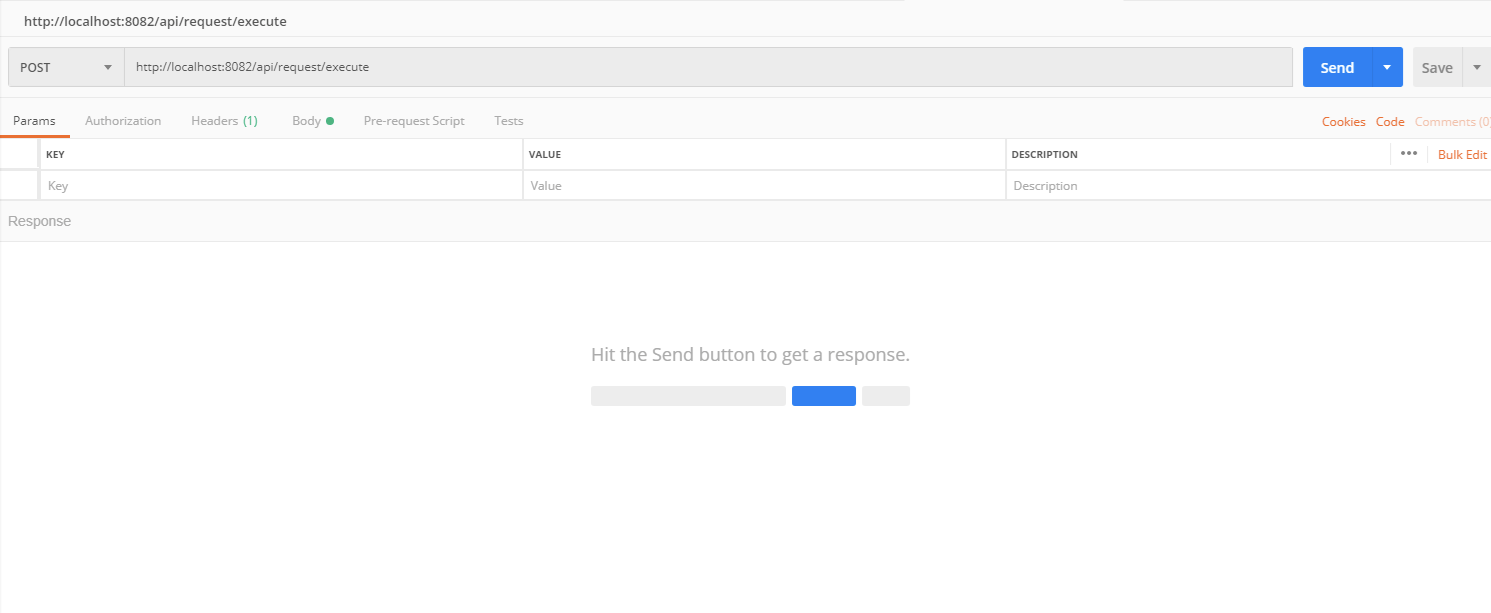
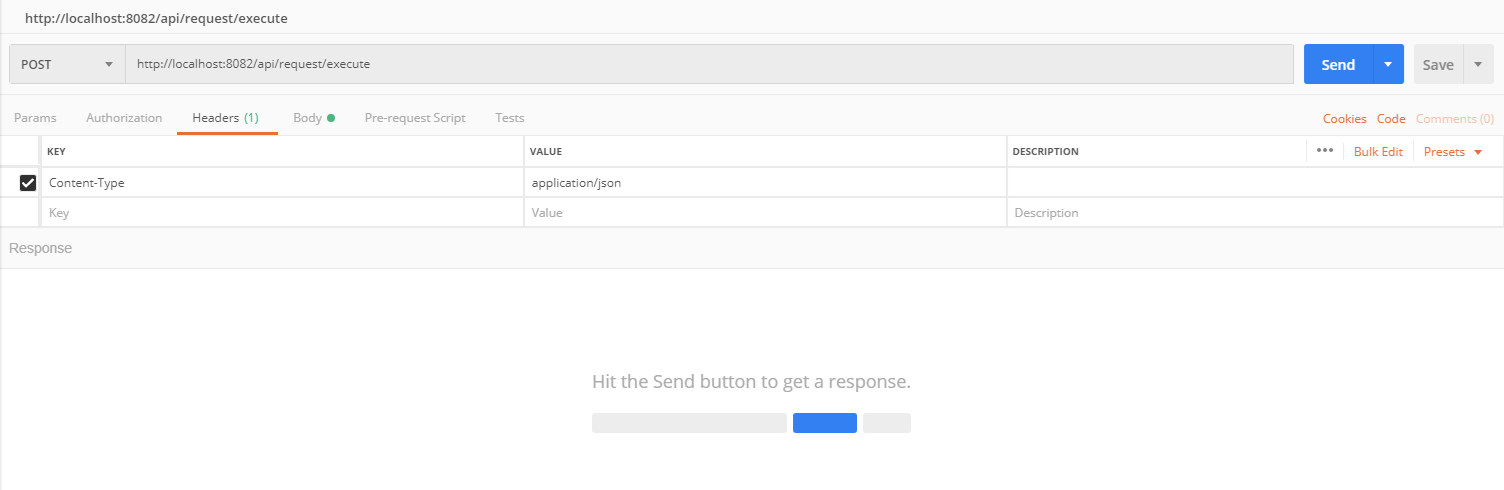
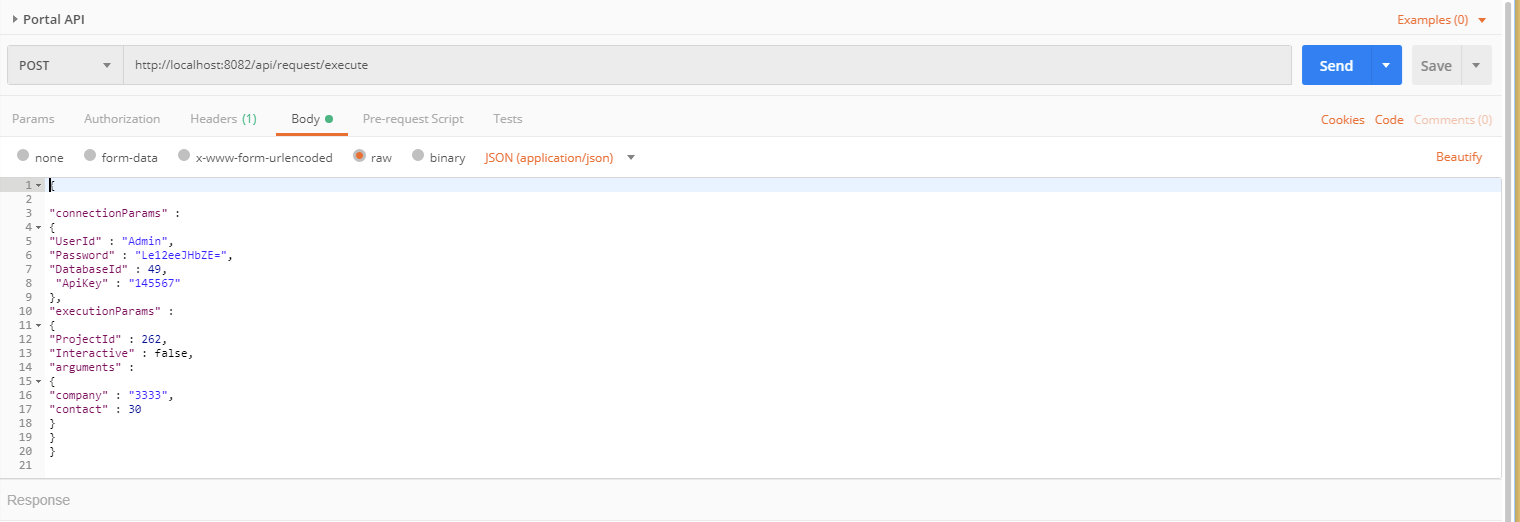
The following Postman screens shows how to setup a sample project call using the web API:
Body structure
Section titled “Body structure”| Connection Params | Description |
|---|---|
| Organization | The organization. When not specified, Default is used |
| DatabaseId | The id the project database. |
| UserId | The user id for running the job |
| Password | The encrypted user password for running the job. |
| ApiKey | Security feature, Optional if a webapi key is not specified in the WebApi service config file, Must match the ApiKey on the server if specified - the project will be only run if Apikeys match on client and server |
| Execution Params | Description |
|---|---|
| Projectid | The integer id of the project to run |
| Reference | Optional reference for the job |
| Interactive | Mode for running the job: false = background (the project is launched only), true = foreground (the api waits for the project to end (used when return arguments are specified -example waiting for a return code to execute another project), Note: Default is false |
| Arguments | Optional name/value dictionary of arguments for running the job in Json format, leave blank if none (remove the Arguments json) |
The following C# shows how to setup a sample project using the web api:
using System;using System.Collections.Generic;using System.Configuration;using Newtonsoft.Json;using appRulesPortal.WebApi.Client;using appRulesPortal.WebApi.Params;namespace SampleWebApi{ static class Program { /// <summary> /// The main entry point for the application. /// </summary> [STAThread] static int Main(string[] args) { if (args == null) return 4; var connectionParams =new ConnectionParams(); var executionParams =new ExecutionParams(); connectionParams.Organization = args[0]; //Organization (or use * for Default) connectionParams.DatabaseId = Convert.ToInt32(args[1]); //project database id connectionParams.UserId = args[2]; //user id connectionParams.Password = args[3]; //password executionParams.ProjectId = Convert.ToInt32(args[4]); //project id; if (args.Length > 5) { executionParams.Reference = args[5]; //reference for job (or use * Note: No spaces if (args.Length > 6) executionParams.Arguments = (Dictionary<string, object>)JsonConvert.DeserializeObject(args[5],typeof(Dictionary<string, object>)); } var apiKey = ConfigurationManager.AppSettings["ApiKey"]; if(!String.IsNullOrEmpty(apiKey)) connectionParams.ApiKey = apiKey; var serviceUrl = ConfigurationManager.AppSettings["WebApiUrl"]; if (String.IsNullOrEmpty(serviceUrl)) serviceUrl = "http://localhost:8082/"; var client =new PortalClient(serviceUrl); //initialize the url of the WebApi service //var result = client.Execute(connectionParams, null).Result; //arguments can be null since it is defined in connectionParams.args client.Execute(connectionParams, executionParams); return 0; } } }